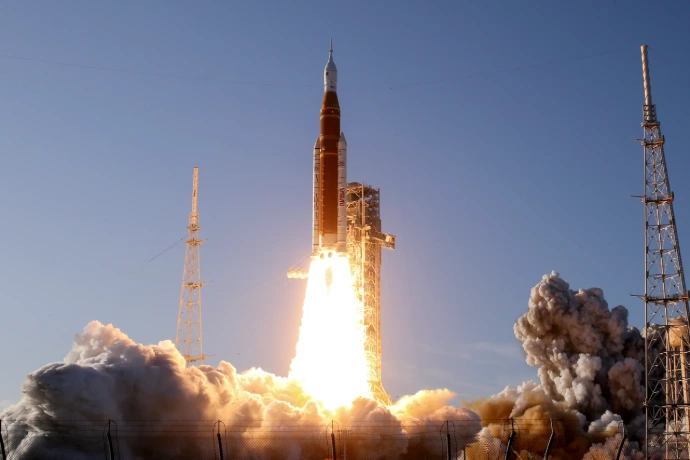
On April 1, 2026, NASA successfully launched Artemis 2, the first crewed mission to the Moon since Apollo 17 in 1972. The four astronauts — Reid Wiseman (commander), Victor Glover, Christina Koch, and Jeremy Hansen — are now on a 10-day lunar flyby aboard the Orion spacecraft atop the powerful Space Launch System (SLS) rocket. While the world celebrates this historic return to deep space, one critical element is quietly powering the entire mission: Artificial Intelligence.
Far from being a simple backup system, AI is at the heart of Artemis 2’s success, handling everything from autonomous navigation to real-time crew health monitoring and system diagnostics in an environment where human reaction time may not be enough.
Why Artemis 2 Matters
Artemis 2 is not just a test flight — it is a critical stepping stone toward sustainable human presence on the Moon. The mission will take the crew on a trajectory that loops around the Moon at a distance of approximately 6,400 km from its surface before returning to Earth. The primary goals are to test Orion’s life-support systems, thermal protection, and communication technologies in deep space under real conditions.
Unlike previous uncrewed Artemis missions, Artemis 2 carries humans, making safety, reliability, and rapid decision-making absolutely essential. This is where Artificial Intelligence becomes a true mission partner rather than just a tool.
The Central Role of AI in Artemis 2
NASA has integrated advanced AI systems across multiple layers of the mission. Here are the most important applications:
- Autonomous Navigation and Flight Control Orion’s AI-powered guidance system can make split-second adjustments during the lunar flyby. It uses machine learning algorithms trained on millions of simulated scenarios to predict and correct trajectory deviations in real time. This reduces the workload on ground control and ensures the spacecraft stays on course even if communication delays occur (which can reach up to 2.5 seconds one way).
- Real-Time Crew Health Monitoring Wearable sensors and interior cameras feed data into an AI health-monitoring system that continuously analyzes the astronauts’ vital signs, sleep patterns, cognitive performance, and stress levels. The AI can detect early signs of medical issues and recommend immediate actions — from adjusting cabin conditions to alerting the crew or ground teams.
- System Diagnostics and Predictive Maintenance Thousands of sensors across the spacecraft send data to AI models that predict potential failures before they happen. This “predictive maintenance” capability is crucial for a long-duration mission, allowing the crew or ground control to address issues proactively rather than reactively.
- Autonomous Decision Support During critical phases like the lunar flyby and Earth re-entry, the AI acts as an intelligent co-pilot. It can analyze multiple variables (fuel levels, radiation exposure, trajectory data) and suggest optimal courses of action within milliseconds — something no human team could match in real time.
- Data Analysis and Anomaly Detection The mission will generate terabytes of data. AI algorithms sift through this information in real time, flagging anomalies that human operators might miss and providing instant recommendations.
How AI Changes the Future of Human Spaceflight
Artemis 2 marks a turning point: for the first time, humans and AI are operating as true partners in deep space. This collaboration paves the way for more ambitious missions, including Artemis 3 (the first crewed lunar landing since 1972) and eventual crewed missions to Mars.
The success of AI in Artemis 2 will influence:
- How future spacecraft are designed
- Training protocols for astronauts
- Mission planning for long-duration exploration
- The development of fully autonomous habitats on the Moon and beyond
Looking Ahead
As the Artemis 2 crew circles the Moon and begins their journey home, they are not just testing hardware — they are testing the future of human-AI collaboration in space. The data gathered from this mission will directly shape how NASA and its international partners approach the next era of exploration.
Artemis 2 is more than a return to the Moon. It is the first real-world demonstration of how Artificial Intelligence will become an indispensable crew member on humanity’s journey into the solar system.
The mission is currently underway, and the world is watching closely. The combination of human courage and artificial intelligence may well be the key that unlocks our future among the stars.